

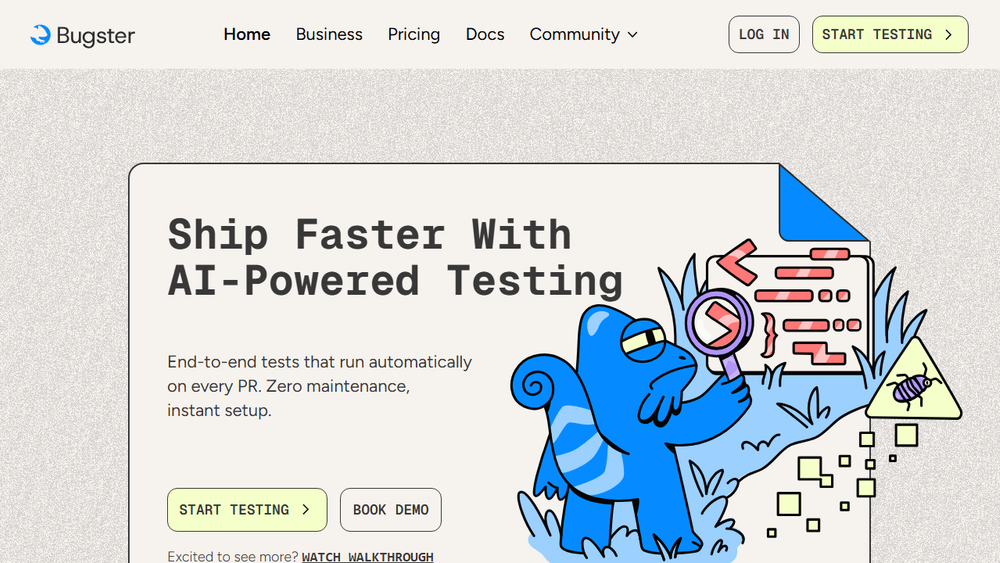
Bugster is an innovative AI-powered platform designed to revolutionize end-to-end testing and QA automation for developers. It aims to eliminate the burden of manual test writing and maintenance by leveraging AI agents to generate and update tests automatically. This allows development teams to focus on building and shipping features with confidence, knowing that their applications are thoroughly tested.
Core Features:
- AI-Generated & Maintained Tests: Bugster's AI agents automatically write and maintain end-to-end tests, eliminating the need for manual scripting. This ensures tests are always up-to-date with application changes.
- Real Browser Testing: Tests are executed in real browsers, providing accurate and reliable results that reflect the actual user experience.
- Continuous Testing on Pull Requests: Bugster runs automated end-to-end tests on every Pull Request (PR), providing instant feedback on potential regressions before they are merged.
- Zero-Maintenance QA Automation: The AI-driven approach significantly reduces the maintenance overhead typically associated with test suites.
- Code-Aware Testing: Integrates with GitHub and offers CLI tools for seamless workflow integration.
- Flexible Deployment: Works locally, on staging environments, and on CI/CD platforms like Vercel and Railway.
- Destructive Agent: A specialized agent that targets recent changes and simulates unpredictable user behavior to uncover edge-case bugs that traditional tests might miss.
- Code-Aware Testing: The platform understands code changes and prioritizes testing critical flows, ensuring that the most impactful areas are covered.
- YAML-based Test Definitions: Tests are defined in YAML, making them accessible and understandable even for non-developers.
- Broad Framework Support: While the core offering is AI-driven, the platform is designed to integrate with various frontend frameworks, including Next.js, React, Svelte, and Angular, with a roadmap for more integrations.
Target Users:
Bugster is primarily targeted at:
- Software Developers: To provide them with immediate feedback on their code changes and reduce the time spent on manual testing.
- QA Engineers: To augment their testing efforts, automate repetitive tasks, and focus on more complex testing strategies.
- Development Teams: To improve the overall quality and stability of their applications, accelerate release cycles, and reduce the cost of bugs.
- Startups and SMBs: Who may have limited resources for dedicated QA teams but need robust testing to ensure product quality.
How it Works:
Bugster integrates into the development workflow, typically via a GitHub App or CLI. When a Pull Request is created, Bugster's AI agents analyze the changes and automatically generate or update end-to-end tests. These tests are then executed in real browsers, and the results are reported back to the PR. The platform's unique 'destructive' agent further enhances test coverage by simulating realistic, unpredictable user interactions, uncovering bugs that might otherwise go unnoticed. The YAML-based test definitions allow for easy customization and understanding of the automated tests.


