

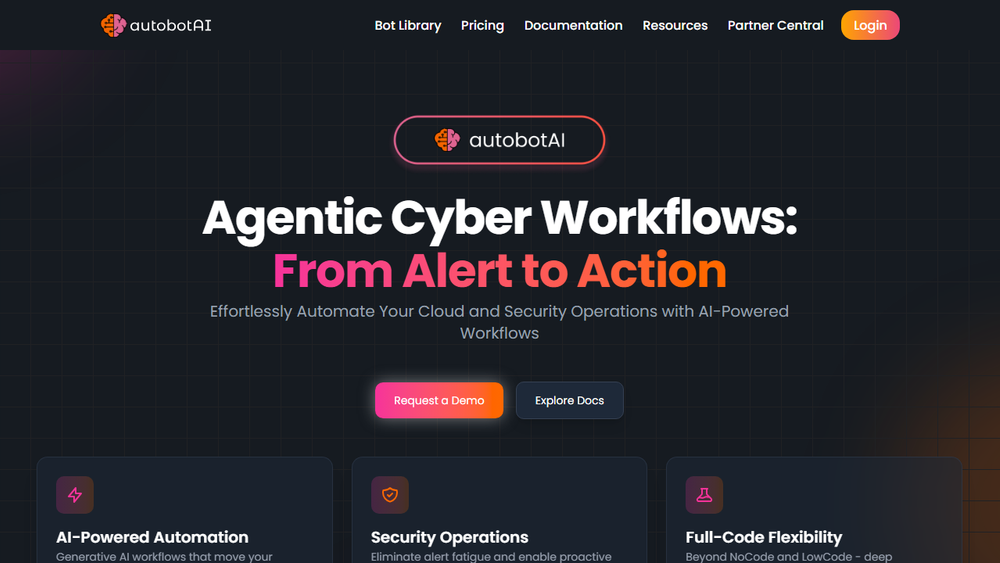
autobotAI is a cutting-edge automation platform designed for hyperautomation in cloud security and operations. It leverages AI to streamline workflows, automate processes, and enhance operational efficiency through no-code and low-code solutions.
Core Features:
- AI-Powered Automation: Utilizes generative AI to create workflows that transition operations from alert to action, acting as an extension of security teams.
- Security Operations Enhancement: Aims to eliminate alert fatigue and enable proactive threat resolution with precision.
- Full-Code Flexibility: Offers deep customization beyond no-code and low-code to meet specific security needs.
- Universal Integration: Connects to any tools with an API, including security tools, cloud platforms, and custom applications, enabling hyperautomation with custom integrations.
- Drag-and-Drop Builder: An intuitive GUI for creating reusable bot building blocks and bots with effortless drag-and-drop functionality.
- Contextual Approvals: Enhances decision-making with LLM-driven contextual summaries and notifications for ITOps, SOC, and CloudOps teams to make swift, informed approval decisions.
- Custom Dashboard: Provides a 360° view of cloud operations with highly accurate and useful visualizations for quick action.
- Automation Insights: Offers insights into compliance violations, incidents, and resource inventories to support process and task mining for targeted automation workflows.
- Model Context Protocol (MCP) Support: Built with future AI integration in mind, supporting MCP for secure connections to external tools, APIs, and data sources.
Target Users:
autobotAI is designed for IT Operations (ITOps), Security Operations Centers (SOC), Cloud Operations (CloudOps) teams, and security professionals looking to automate and enhance their operational efficiency and security posture. It caters to users who need both no-code/low-code simplicity and the flexibility of full-code customization.
Deployment Options:
The platform is available as a SaaS (Software as a Service) and can also be self-hosted, offering flexibility to meet different organizational requirements.


