

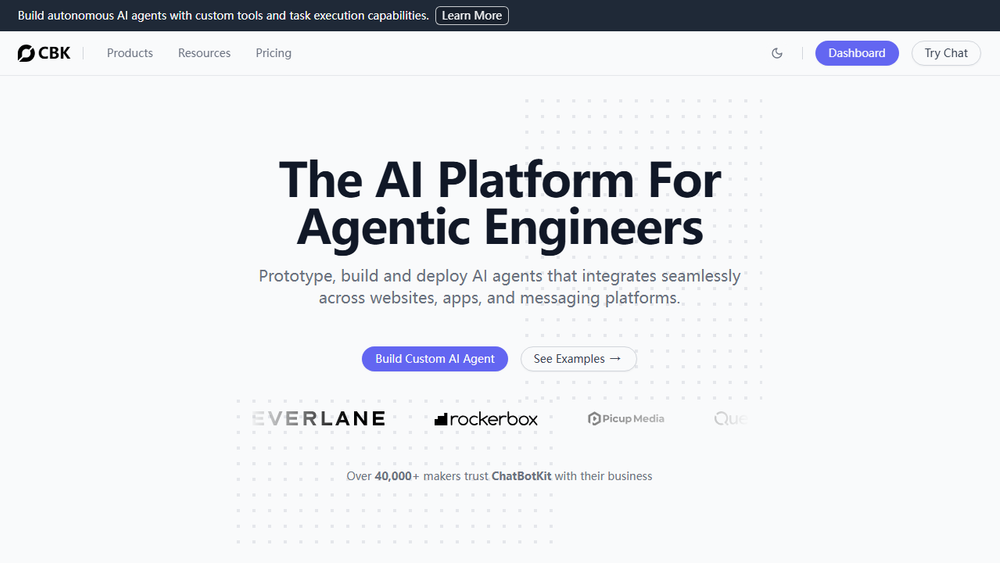
ChatBotKit is a comprehensive, vertically integrated conversational AI platform designed for building, deploying, and interacting with AI bots, agents, and agentic systems. It positions itself as a "Lego set for AI," providing reusable components that enable users to assemble new solutions without the typical costs and resource burdens associated with other platforms. This approach fosters flexibility and personalization, allowing for tailored AI behavior, responses, and integrations to meet specific needs and use cases.
Core Features and Capabilities:
- AI Agents: ChatBotKit empowers users to create AI agents capable of automating business processes and enhancing service delivery. These agents can be built and deployed across various channels, offering a powerful tool for businesses seeking to improve efficiency and customer interactions.
- AI Widgets: The platform facilitates the creation and deployment of AI widgets, designed to enhance customer experience and streamline operations on websites and applications. These widgets provide an interactive AI presence for users.
- AI for Messaging Platforms: ChatBotKit enables seamless integration of conversational AI into popular messaging platforms such as Slack, Discord, WhatsApp, Messenger, and Telegram. This allows businesses to extend their AI capabilities to where their users already communicate.
- AI SDKs: For developers, ChatBotKit offers a range of Software Development Kits (SDKs) that simplify the process of building sophisticated conversational AI systems. These SDKs provide the tools necessary for creating powerful and custom AI solutions.
- AI Enterprise Solutions: The platform caters to enterprise needs by offering solutions to transform organizations with intelligent AI agents and robust search capabilities. It supports the creation of custom internal chat applications for maximum flexibility and control.
- Whitelabel Solutions: ChatBotKit provides whitelabel solutions, allowing businesses to create and deploy their own branded chatbots. This feature is ideal for companies looking to offer a customized AI experience under their own brand.
- Conversational AI Platform: At its heart, ChatBotKit is a versatile conversational AI platform. It distinguishes itself by offering more features and core technologies than other platforms, enabling the creation of any type of AI solution, from simple bots to complex agentic systems.
- Data Security: ChatBotKit prioritizes data security, employing industry-standard protocols and practices to ensure the safety and security of user data. The platform is compliant with GDPR and other data privacy regulations.
Target Users:
ChatBotKit is designed for a broad audience, including:
- Developers: Who can leverage the SDKs and platform's flexibility to build custom AI solutions.
- Non-developers: Who can utilize the platform's intuitive components to create and deploy AI bots without extensive coding knowledge.
- Businesses of all sizes: From startups to enterprises, looking to integrate AI into their operations, customer service, and communication channels.
- Agentic Engineers: Individuals focused on building and deploying sophisticated AI agents and agentic systems.
Key Differentiators:
ChatBotKit stands out due to its focus on customization and versatility. Unlike general-purpose conversational AI solutions, it allows users to build and tailor AI bots and agents to specific needs. Its comprehensive suite of tools for customization, integration, and deployment makes it a go-to platform for a wide array of AI applications, from customer service bots to advanced enterprise-level AI systems. The platform's commitment to security and compliance further enhances its appeal for businesses handling sensitive data.
Overall Value Proposition:
ChatBotKit simplifies the complex process of building and deploying conversational AI, making it accessible to a wider range of users. Its modular approach, extensive features, and focus on customization empower users to create powerful, tailored AI solutions that can be integrated across various digital touchpoints, ultimately driving efficiency, improving customer engagement, and fostering innovation.


