
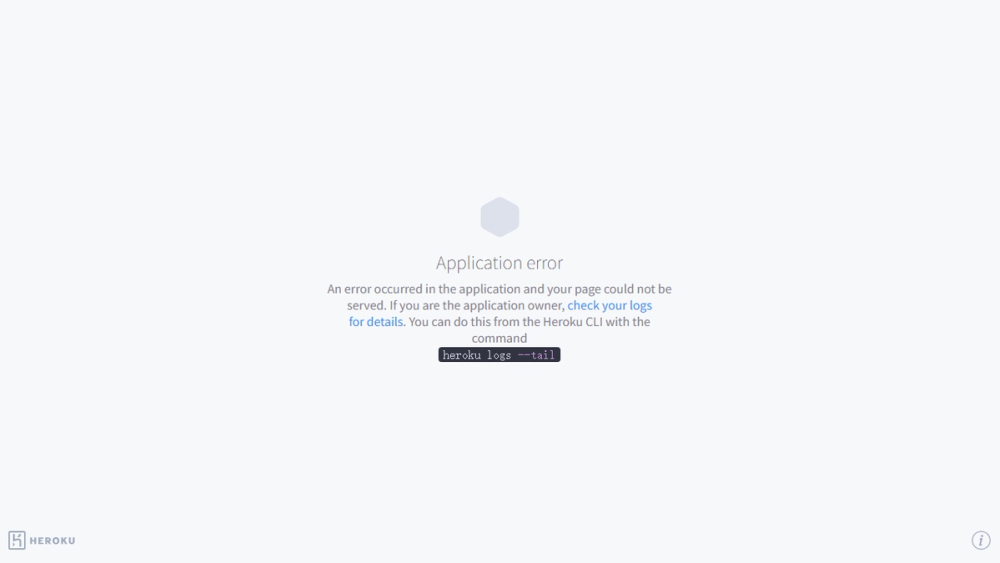
This HTML content represents a basic error page, specifically an 'Application Error'. It's designed to be displayed when an application hosted on a platform like Heroku encounters an unrecoverable error. The page itself is minimal, containing only an <iframe> element that loads an external HTML file from a Heroku CDN. This external file, application-error.html, likely contains the user-facing error message and potentially some styling to present it clearly. The primary purpose of this page is to inform the user that something has gone wrong with the application they were trying to access, rather than crashing the browser or showing a generic server error. The HTML structure is straightforward, with meta tags for viewport and character set, and a title indicating the error. The CSS is also very basic, ensuring the iframe takes up the full viewport and has no borders, effectively making the content of the loaded error page the entirety of what the user sees. This approach allows for centralized management of error page content, meaning the appearance and message of the error page can be updated without modifying the core application code. The target audience for this page is any user who encounters an error while trying to use a web application hosted on a platform that utilizes such error pages. It's a common pattern in cloud hosting environments to provide a clean and informative way to handle application failures. The simplicity of the HTML suggests it's a template or a default error page, and the actual error details would be logged on the server-side for developers to diagnose. The use of an iframe is a common technique to isolate the error page content from the main application's DOM, preventing potential conflicts or security issues. While this specific HTML is very basic, the concept of a dedicated error page is crucial for user experience and application maintainability. It provides a consistent and professional way to handle unexpected situations, guiding users on what to do next, if possible, or at least informing them of the issue. The Heroku CDN link indicates that this is a pre-built component provided by Heroku for its users, simplifying the setup of error handling for their deployed applications. Developers can often customize the content loaded by the iframe or configure their application to serve a different error page altogether, but this serves as a default fallback. The overall goal is to provide a graceful degradation of service when an application fails, minimizing user frustration and providing a clear signal that an issue has occurred.
Newsletter
Join the Community
Subscribe to our newsletter for the latest news and updates


