

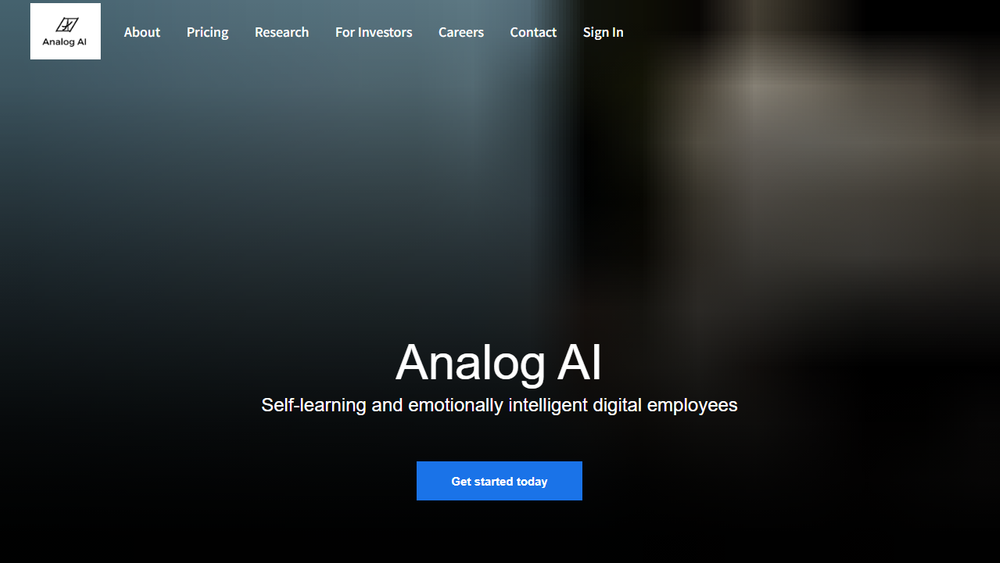
Analog AI introduces a revolutionary concept of 'analog humans' – sophisticated digital beings designed to act as assistants, primarily for asynchronous communication via video conference calls. This innovative solution directly addresses the pervasive challenge of time zone differences in remote work environments. Imagine a scenario where you need to conduct a meeting or interview, but participants are spread across various time zones, making real-time collaboration difficult. Analog AI's digital employees bridge this gap by enabling seamless interaction regardless of geographical location or working hours.
These digital beings are not mere chatbots; they are described as 'self-learning and emotionally intelligent.' This implies a level of sophistication that goes beyond simple task execution. They are equipped with advanced emotional intelligence, allowing them to understand and respond to human emotions, making interactions more natural and empathetic. Furthermore, their self-learning capabilities mean they can adapt and improve over time, becoming more efficient and personalized assistants. This is crucial for tasks that require nuanced understanding and interaction, such as customer service, virtual tours, or even short interviews.
The core functionality revolves around their ability to handle video conference calls asynchronously. This means a digital employee can represent you in a meeting, record the proceedings, and even interact with other participants on your behalf, providing summaries or taking actions as programmed. This frees up human employees to focus on more strategic or complex tasks, boosting overall productivity and efficiency. The technology aims to create digital replicas that can convincingly engage in conversations, understand context, and make autonomous decisions within defined parameters.
Analog AI's digital employees are particularly suited for specific use cases. They are designed for virtual tours, offering potential clients or stakeholders an interactive and engaging experience without requiring a human agent to be present in real-time. This is especially valuable in industries like real estate, where showcasing properties to a global audience is common. Additionally, they are positioned for short interviews, acting as initial screeners or interviewers for job candidates. This can streamline the recruitment process, allowing HR departments to handle a larger volume of applications more effectively.
The underlying technology leverages advanced AI, including natural language processing (NLP), emotional recognition, and machine learning. The 'common-sense reasoning engine' mentioned is a key differentiator, enabling these digital humans to make autonomous decisions and learn from their experiences. This engine is designed to go beyond simple pattern matching, incorporating a deeper understanding of causality and real-world logic. When faced with complex situations that exceed their capabilities, they are programmed to escalate these cases to human agents, ensuring that critical issues are always handled by human expertise.
The platform emphasizes the creation of 'digital 3D avatars' that are photorealistic. This visual aspect is important for creating a sense of presence and engagement, making the interaction feel more human-like. The ability to hire these avatars for specific tasks, such as virtual tours or interviews, provides a flexible and scalable solution for businesses. The company also highlights their pricing models, suggesting that these advanced AI assistants are accessible for various business needs.
In essence, Analog AI is building the next generation of digital assistants that are not just tools but intelligent, empathetic digital colleagues. They aim to redefine remote work by eliminating communication barriers and enhancing human-AI collaboration. The focus on emotional intelligence and self-learning sets them apart, promising a future where digital employees can seamlessly integrate into human workflows, providing valuable support and improving user experiences.


